


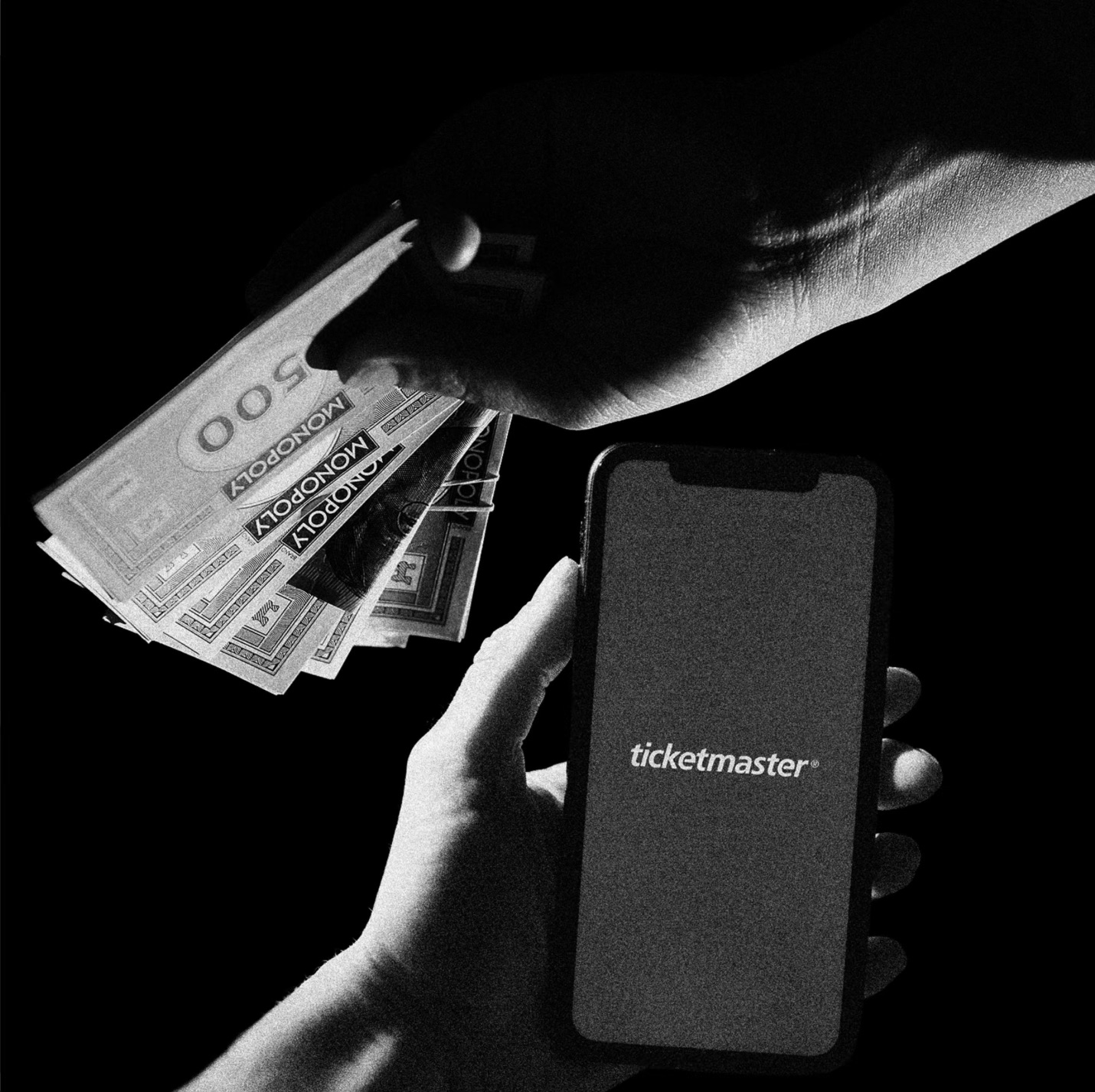
Ticketmaster and Live Nation have been executing a lobbying blitz across the country to push for nearly identical bills, which would set price caps on the secondary seller market. It’s a strategy that deflects the mounting public dissatisfaction against them, but it’s not working so far.
Ten state legislatures in 2026 — Hawaii, Kansas, Maryland, Minnesota, New Mexico, Oklahoma, Tennessee, Washington, Wisconsin, and West Virginia — have abandoned various versions of price cap proposals. In a state like New York, the post-merger behemoth of Ticketmaster and Live Nation is spending $25,000 a month on lobbying services from Bolton St. Johns.
“My reaction is, that’s high,” Brian Berry, the executive director of the Ticket Policy Forum, tells me when I relayed the latest figures to him.
Berry, whose organization represents the secondary seller players of StubHub, SeatGeek, Vivid Seats, and TickPick, has been astounded by the effort Ticketmaster and Live Nation have been putting forward in state legislatures amid the toughest legal scrutiny they’ve ever come under. “Anyone who would listen to me, I would say, this is incredible,” Berry says. “There should be a book written about this.”
Last month, a federal jury ruled against Live Nation and found the company is acting as a monopoly. The company also settled with the Department of Justice, but the trial proceeded.
The company will retain Ticketmaster for now, and the remedies from the federal judge are still up in the air. They could include some version of breaking them up, but that’s no guarantee. Yet as that case was making its way through the process, Ticketmaster and Live Nation reared their heads again in state legislatures and tried to garner bipartisan support while state AGs tried to hold the line against them, Berry explained.
This all comes after Democrats have tried to talk a big game about Ticketmaster, yet the monopoly’s state legislative efforts have largely gone under the radar.
“This is an enormous diversion away from the Live Nation - Ticketmaster monopoly,” says Diana Moss, the vice President and director of competition policy at the Progressive Policy Institute. “Don’t look over here at the monopoly, look over there at the resale market. Let’s call the resale market a bunch of scalpers, make unsubstantiated claims about how it functions, and lay the blame at the feet of the resale market.”
Berry and those on the resale market side of the ledger have fought back, and one of the first stats he’ll bring up is that 80 percent of all tickets sold flow through… Ticketmaster.
“This has been a methodical, intentional concentration of power over an entire industry,” he says.
Another more astonishing development both Moss and Berry mentioned was the way Ticketmaster and Live Nation have bent the National Independent Venue Association (NIVA) to their will.
“I cannot overstate the severity of the market intervention,” Moss says of the way Live Nation got NIVA to support these price cap bills. For Berry, the influence Ticketmaster has exerted shows “they don’t have to own the place to run the place.”
These smaller venues are in a bind, because they depend on Ticketmaster and Live Nation for the vast majority of programming, but they also need the secondary sellers to help fill up the rest of their seats, which almost never sell out on the main platform.
This will be an interesting space to monitor, with the brand baggage of Ticketmaster and its lesser known parent company Live Nation coming up against an activated base of smaller but still cash flush secondary market players.
“I don’t think they hurt for access to lawmakers,” Berry says of the ticket sales monopoly.
Whether they emerge as the behemoth they’ve been will depend on the ability of state lawmakers to withstand the pressure from both formal lobbying efforts and the squeezed venue operators in their districts. But for now, Ticketmaster and Live Nation aren’t getting their way, but with less attention on them at the state level, they might be able to call Democrats on their bluff and see if they can eek some wins out with their backs up against the wall.